Leading the Transformation Toward Sustainable Buildings and Smart Cities
- Dec 9, 2025
- 3 min read
RCI Sustainability Group GM Shawn Jang on Taiwan’s Net-Zero Trends and International Standards

In an era where net-zero carbon emissions have become a national consensus, sustainable buildings and smart cities have emerged as key priorities for the building and construction industry. Shawn Jang, General Manager of RCI Sustainability Group, has dedicated more than two decades to advancing sustainability practices in Taiwan. Through the promotion of LEED green buildings, WELL healthy building standards, and the EarthCheck sustainability framework for cities, he has played a pivotal role in guiding Taiwan toward healthier, low-carbon, and intelligent urban development.
Jang analyzes Taiwan’s path toward sustainability from five key perspectives—policy, international standards, urban vision, AI-driven technology, and talent cultivation—illustrating how the journey to net-zero must evolve from individual buildings to holistic city systems.
1. Policy and Mindset: The Foundational Logic Behind Sustainability
Since Taiwan announced its “2050 Net-Zero Emissions” vision in 2021 and implemented the Climate Change Response Act, sustainability has become a core issue across industries. However, Shawn Jang emphasizes that the real challenge of sustainability does not lie in technology, but in transforming decision-making mindsets.
“Only when ESG becomes part of a company’s everyday decision-making can the sustainability ecosystem truly accelerate.”
To advance sustainable development, Taiwan must strengthen efforts in the following areas:
Establishing a robust low-carbon materials supply chain
Providing more attractive policy incentives
Gradually integrating sustainability standards into building regulations
These actions will determine whether sustainable building practices can truly take root in Taiwan.
2. LEED × WELL: Dual Pillars of Environmental and Human-Centered Performance
As one of Taiwan’s earliest professionals to promote both LEED and WELL standards, Jang highlights their complementary nature:
LEED evaluates a building’s environmental performance, including energy efficiency, water usage, carbon emissions, and material sustainability.
WELL focuses on the health and well-being of building occupants, addressing factors such as lighting, air quality, comfort, and psychological wellness.
RCI has helped organizations achieve LEED Platinum certification along with UL Healthy Building verification, demonstrating that environmental sustainability and occupant well-being can progress together.
“LEED establishes the foundation of sustainability, while WELL represents the extension toward livable, human-centered cities.”

3. EarthCheck: A Comprehensive Governance Framework for Sustainable Cities
Sustainability should not remain at the level of individual buildings; it must expand to the scale of entire cities.
“What truly impacts climate and quality of life are cities—not single buildings.”
EarthCheck evaluates sustainability from a city-level perspective, encompassing:
Carbon footprint management
Waste and water resource management
Community engagement and cultural preservation
Social resilience and economic systems
RCI has applied the EarthCheck framework to community development projects, industrial parks, and healthcare facilities, promoting city-level strategies such as shared energy systems and integrated health performance indicators.
4. AI × Intelligent Platforms: The Central Nervous System of Sustainable Buildings
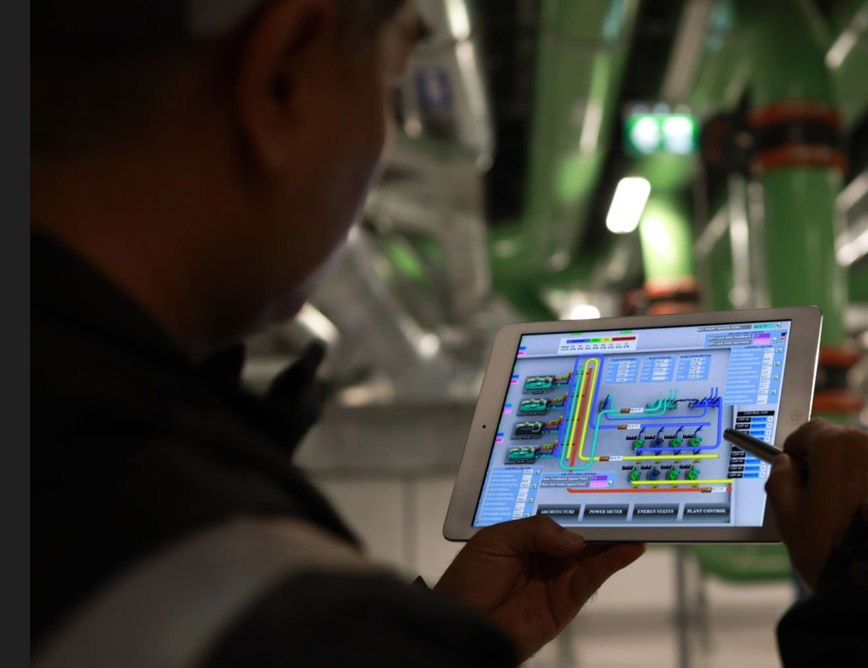
AI and IoT are reshaping the logic of building management. RCI’s ECON intelligent platform integrates:
Indoor air quality
Temperature and humidity
Energy consumption
Building carbon emissions data
Through AI analytics, the platform enables:
User behavior prediction
Energy efficiency optimization
Intelligent operations and maintenance management
“AI is not just a monitoring tool—it is the central nervous system of sustainability decision-making.”
This technological integration is helping Taiwan’s smart building standards align more closely with global sustainability trends.

Talent and Culture: The Core Driving Force Behind Sustainability
According to Shawn Jang, advancing sustainability relies not primarily on technology, but on people.
Future sustainability professionals must possess:
Cross-disciplinary capabilities that integrate design, engineering, health, and ESG
An understanding of sustainability as a cultural practice rather than a branding exercise
Systematic thinking and strong execution skills
“When people experience more natural light, cleaner air, and greater comfort, they realize that sustainability is not a trend—it is a standard of living.”
This belief is also why the RCI team upholds “designing for impact, not for certification” as its core cultural value.
Conclusion: Making Buildings the Starting Point for Urban Transformation
From international standards to city-scale governance, and from AI-driven intelligent platforms to sustainability talent development, Shawn Jang has played a pivotal role in embedding sustainability into Taiwan’s development landscape.
“Buildings are the vessels of human civilization—and the starting point of meaningful change.”
As Taiwan moves toward its 2050 net-zero goal, sustainable buildings represent not just a technical advancement but a profound transformation of the city system. RCI will continue its commitment to shaping low-carbon, healthy, smart, and resilient urban environments through professional expertise and long-term action.
📎 Appendix|List of Media Outlets Featuring This Interview
The following media outlets have published or featured this interview (in no particular order):
id SHOW Interior Design Platformhttps://www.idshow.com.tw/article/id/6682
Archi Asia (Asia Architecture Network)https://www.archi.net.tw/tw/news/news-detail-611.html
Yahoo Taiwan Newshttps://tw.news.yahoo.com/share/3cdee3dc-3a31-4e92-b489-47829170db77
LIFE Mediahttps://life.tw/?app=view&no=2863541
HomeTube / HomeKinghttps://home.housetube.tw/kb/7689
PChome Newshttps://news.pchome.com.tw/magazine/report/li/iDSHOW/15693/176175360021486218005.htm