RCI Sustainability Group and Schneider Electric Co-Host “Little Things, Big IMPACT — Building the Future, Building Sustainably: Developer Leadership Dinner”
Focusing on high-performance buildings, the event brought long-term developer partners together to advance sustainability—from smart operations to low-carbon procurement.

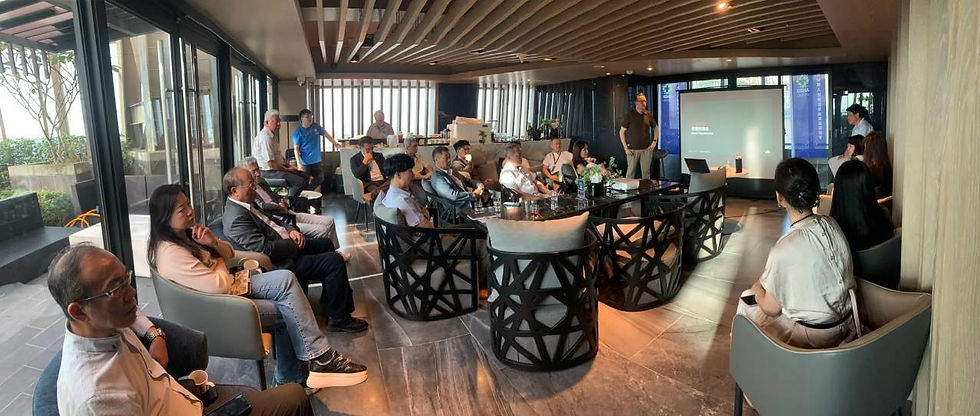
RCI Sustainability Group and Schneider Electric recently co-hosted the “Little Things, Big IMPACT — Building the Future, Building Sustainably: Developer Leadership Dinner” at Millennium Hotel Taichung. Co-invited by both hosts, long-term developer partners and industry representatives gathered for keynote sharing, dialogue, and on-site showcases to discuss practical challenges and workable pathways for sustainability in housing—helping projects turn sustainability from an aspiration into deliverable, verifiable results.
The event was jointly curated by RCI Sustainability Group and Schneider Electric, bringing together long-standing partners from both organizations. Many attendees were close, long-term developer partners of RCI Sustainability Group. Through focused discussions, participants exchanged perspectives on market trends, evolving standards, and real-world implementation considerations, strengthening alignment across the ecosystem.

RCI Sustainability Group noted that expectations for sustainability in the housing market are shifting from “concepts” to quality that can be verified. High-performance buildings are not only about energy efficiency—they also encompass safety, resilience, health and comfort, and operable, maintainable management. When sustainability targets are measurable and embedded across planning and delivery, developers can respond more clearly to residents’ long-term expectations for quality of living and risk management.
From Smart Buildings to Smart Operations
Getting the details right is what delivers long-term safety and peace of mind
During the exchange, “smart systems and operations” served as a key entry point. The discussions emphasized that the value of smart buildings lies not only in adding devices, but in whether operations logic and maintainability are designed in from the outset. For residential power and system management, clear load zoning, circuit planning and labeling, expansion readiness, and maintenance access all improve post-handover troubleshooting efficiency and user safety—while reducing lifecycle maintenance costs and friction for residents.
RCI Sustainability Group highlighted that making sustainability real often comes down to consistent execution of critical details. When the “small things” are designed and delivered correctly, they generate meaningful, compounding impact over the building’s lifecycle—turning sustainability into a quality assurance residents can actually feel.

Moving Toward a Low-Carbon Standard
Green procurement and carbon transparency as practical starting points
As policies and market expectations evolve, the dinner also addressed pragmatic approaches under the low-carbon trend. Beyond reducing operational emissions, buildings are increasingly expected to manage and disclose embodied carbon associated with materials and equipment. Participants agreed that starting with green procurement—prioritizing materials and equipment with environmental labels and transparent carbon-related disclosures—offers a feasible, measurable path today, while preparing projects for future building carbon accounting and low-carbon requirements.
Co-Hosting to Accelerate What’s Deliverable and Maintainable
As co-hosts, RCI Sustainability Group will continue to support developers with a sustainability advisory and integrated planning perspective—translating sustainability goals into executable design strategies and certification/assessment pathways. Schneider Electric shared expertise in electrical safety and system integration, helping projects implement robust foundations and management mechanisms for safety, resilience, energy efficiency, and smart control. Both parties look forward to further cross-domain collaboration with developer partners to advance sustainable housing—making sustainability not just a message, but a clear and replicable quality standard that the market can follow and residents can experience.
Event Information
Event: Little Things, Big IMPACT — Building the Future, Building Sustainably: Developer Leadership Dinner
Venue: Millennium Hotel Taichung, B2 Banquet Hall
Format: Keynote sharing, dialogue exchange, welcome showcase, and dinner networking