RCI and TESA Advocate for Healthier Indoor Environments

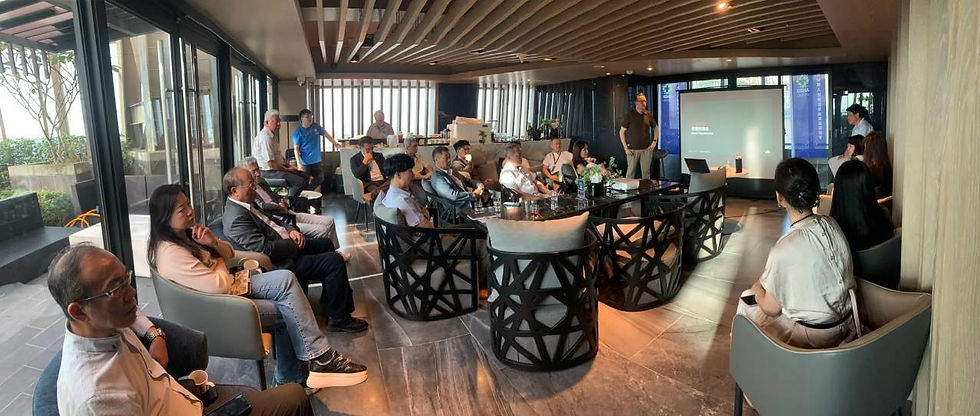
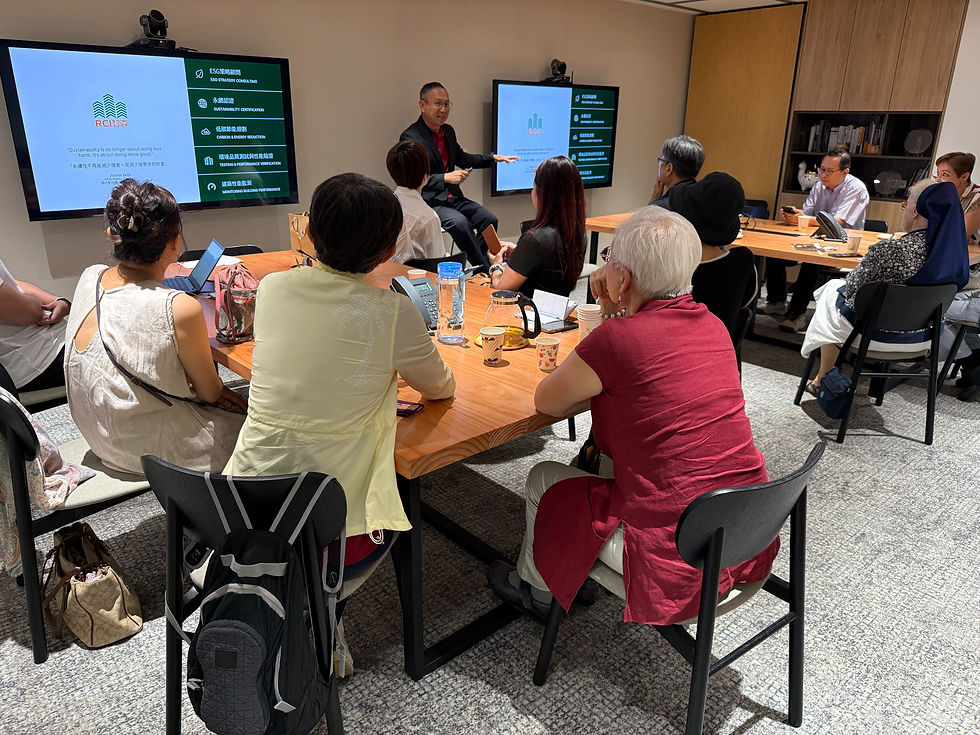
On August 5, 2025, Mr. Shawn Jang, General Manager of RCI and Board Member of the Taiwan Ecological Sustainability Association (TESA), was invited as a featured speaker at a TESA professional forum. Together with association representatives, he participated in a focused discussion on “Strategies for Improving Air Quality—Focusing on Indoor Spaces”, addressing the growing post-pandemic challenges of air quality management, health-oriented building design, and ESG-driven environmental governance.
Building Healthy Indoor Spaces: From Design to Monitoring and Governance
Health-Centered Design: Delivering RCI’s Integrated Sustainability Vision
Shawn opened with the principle of “Design for Health”, emphasizing that sustainable buildings should go beyond energy efficiency to prioritize occupant well-being and comfort. Since its founding in 2013, RCI has completed over 8 million square meters of certified or optimized building space. With extensive experience in LEED, WELL, EarthCheck, and UL VHB, RCI supports clients across sectors in enhancing their sustainable competitiveness.
Data-Driven Smart Management: Demonstrating RCI’s Proven Impact
During the session, Shawn shared how RCI implemented a comprehensive air quality monitoring system in its own office—tracking CO₂, PM2.5, and TVOC—integrated with automated ventilation and air purification controls to improve both energy performance and indoor comfort. TESA’s Executive Director, Mr. Luo, echoed this focus by highlighting the lack of systematic air quality monitoring in many high-occupancy, enclosed environments—such as libraries—which often lack early warning capabilities and reliable data.He noted: “In the post-pandemic era, we must not only protect the right to read—but also the right to breathe.” He urged public and private sectors to adopt science-based air quality monitoring and transparent data sharing to enhance risk management and public trust.

Board Member Engagement: Diverse Perspectives, Broader Applications
The forum also fostered active discussion among TESA board members.
Vice Chairman Mr. Chih-An Shao pointed out that airport VIP lounges face similar challenges and suggested that air quality assessments and classification systems could be extended to such high-end, enclosed facilities.
Sister Rosemary, a long-time advocate of eco-campus development, emphasized the importance of integrating sustainability and environmental health into educational settings. Her focus on nature-based and green campus design aligns closely with RCI’s mission and opens possibilities for future collaboration in the education sector.
Other directors shared practical insights related to air quality issues in office buildings, performance venues, and cultural facilities—broadening the applicability of the strategies discussed.
Shawn concluded by stating that indoor air quality management is now an essential element of ESG practice. Through scientific monitoring, transparent reporting, and targeted improvement actions, organizations can align with the UN Sustainable Development Goals—notably SDG 3 (Good Health and Well-being), SDG 11 (Sustainable Cities and Communities), and SDG 13 (Climate Action)—while strengthening disclosure credibility and stakeholder confidence.

At the close of the event, TESA Chairman Mr. Mao-Nan Chien presented a certificate of appreciation to Shawn and the RCI team, recognizing their long-standing contributions to green building, indoor environmental quality, and sustainability education. He expressed hopes for continued collaboration in promoting healthier indoor environments across various sectors.
For Further information
TESA has also published a summary of this event on their official website.